Eastern Missouri University
Tau Phi Epsilon
Fortes in Unitate
Strength in Unity. A fraternity built on brotherhood, scholarship, service, growth — and the belief that men become stronger when they learn to stand together.
Established April 14, 1924
More than letters
Strength Is Something You Build Together
Tau Phi Epsilon is not the largest fraternity at Eastern Missouri University, nor the flashiest house on Greek Row. Its identity rests on something more deliberate: brothers looking out for one another, challenging one another to grow, and creating a place where very different men can find common ground.
The fraternity’s values center on brotherhood, academic excellence, community service, and personal growth. For Bear Houston, those ideas gradually stop feeling like language from a pledge manual and become something lived — late-night study sessions, older brothers mentoring younger ones, shared responsibilities, and the knowledge that someone notices when you walk into the room.
BrotherhoodScholarshipServiceGrowth
The founding
Six Students. One Different Idea.
Tau Phi Epsilon began above a drugstore in downtown Hillcrest, when six students at what was then Missouri State Teachers College set out to build a fraternity around cooperation rather than status.
The six founders — Richard Davis, Walter Finch, James Howard, Elliot Morgan, Thomas Phillips, and Martin Stevens — first met in a rented room above Henderson’s drug store on Main Street. Their guiding idea was simple: real strength comes from men working together.
That idea became the fraternity’s formal motto, Fortes in Unitate — Strength in Unity — and eventually the principle that links generations of Tau Phi brothers to one another.
Richard DavisWalter FinchJames HowardElliot MorganThomas PhillipsMartin Stevens
ΤTruth
ΦPerseverance
ΕExcellence
The crest & colors
Symbols With a Purpose
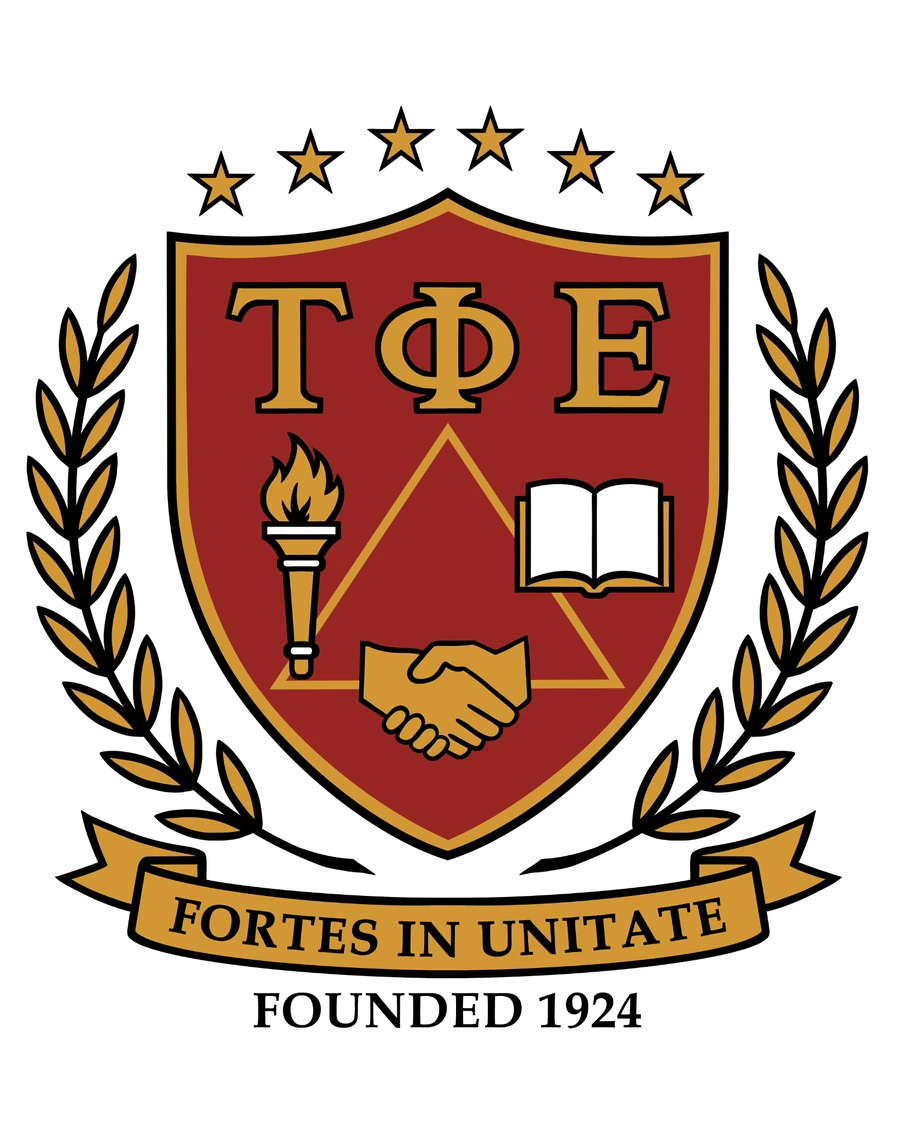
The crest carries the fraternity’s identity in a collection of traditional symbols. The torch represents knowledge and guidance; the open book reflects learning and wisdom; and the clasped hands represent brotherhood and unity.
The Torch
Knowledge and guidance — the responsibility to learn, lead, and help illuminate the way for others.
The Book
Learning and wisdom — a reminder that scholarship and intellectual growth are part of fraternity life.
Clasped Hands
Brotherhood and unity — the connection between individual men and the strength created when they support one another.
CrimsonThe blood of brotherhood
GoldThe value of friendship
Other elements of the crest remain part of Tau Phi Epsilon’s visual tradition; their formal meanings can be added here as that canon is defined.

The chapter house
Comfort Over Appearance
The Tau Phi Epsilon house sits slightly apart from the larger fraternities on Greek Row. Its lawn is less manicured, its wooden letters show their age, and the porch furniture looks well used. Inside, decades of composite photographs line the walls beside worn leather sofas, mismatched chairs, and a coffee table marked by years of bottles, books, games, and late-night conversations.
It is not a pristine showcase. That is part of its appeal. The house is a working home: brothers study in the common room, eat together in the dining room, gather for meetings, play pool and Nintendo in the recreation room, build pledge paddles in the basement workshop, and share responsibility for keeping the place running.
Living RoomDining RoomRecreation RoomKitchenBasement WorkshopBrother Rooms
Traditions
Learning What the Letters Mean
Tau Phi Epsilon’s pledge process is designed to connect new members to the history of the fraternity while teaching them to depend on one another.
The Pledge Manual
A slim red book embossed with the crest introduces new members to the fraternity’s history, values, traditions, songs, and institutional memory.
Big Brothers
Each pledge is paired with an active brother who serves as mentor, guide, and friend — a relationship intended to continue beyond the pledge semester.
The Paddle
Pledges build and decorate their own wooden paddles in the house workshop, combining craftsmanship, fraternity symbols, and something personal.
Service & Challenge
Community service, fraternity knowledge, physical challenges, and shared responsibilities are meant to test endurance without humiliation or hazing.
Songs
Fraternity songs link brothers across generations and are carried into chapter meetings, alumni gatherings, celebrations, and memorials.
The Pledge
The fraternity closes important moments with words centered on unity, character, scholarship, growth, service, integrity, and honoring those who came before.
Brotherhood
Fortes in Unitate
On paper, the motto means Strength in Unity. In the house, it means something more practical: study groups forming without being assigned, older brothers mentoring younger ones, everyone helping with the dishes, and men from different backgrounds finding ways to make one another better.
That is what draws Bear to Tau Phi Epsilon. He enters the house uncertain whether he belongs in fraternity life at all. What he finds instead is a place where belonging is created through participation, trust, responsibility, and the accumulated small acts of looking out for one another.
We’re not the biggest fraternity on campus… What we do have is actual brotherhood.
— Tau Phi Epsilon orientation
Enter through Bear’s story
From Uncertainty to Brotherhood
Bear first encounters Tau Phi Epsilon during his freshman year at Eastern Missouri University. By Book Three, the fraternity has become one of the central places where his confidence, friendships, and emerging leadership begin to take shape.